The first meeting is never really about design.
It might look like one. There are introductions, there is a brief, there are references and inspiration images and color words like "sophisticated" and "elevated" and "timeless." But the work that determines whether the eventual design will be genuinely good or merely competent does not happen in that meeting. It happens in the questions asked before the sketchpad opens.
At ESQUE, we call this the listening phase. It is not a formal stage with a deliverable at the end. It is a posture, a decision to understand before we express. And it shapes everything.
What Listening Actually Means
Listening in a design context means something specific. It means asking questions whose answers you do not know. It means sitting with the discomfort of not proposing anything yet. It means being genuinely curious about a client's history, their competition, their customers, their failures, and the things they believe about their business that they have never had to articulate out loud because no one has asked.
Most clients have never been asked those things by a designer. They have been asked what colors they like, what their competitors look like, what their budget is. Those are useful questions. They are just not the questions that lead to great work.
The questions that lead to great work are harder. What makes this place impossible to replicate? What do your best customers feel the moment they arrive, not think, feel? What is the most honest thing about what you are building? If this brand were a person, what would it refuse to do?
The answers to those questions cannot be found in a brief. They have to be drawn out in conversation, sometimes over several meetings, sometimes with people who initially seem tangential: the person who has been working the front desk since the beginning, the architect who spent years understanding the site, the founder's spouse who remembers the original idea.
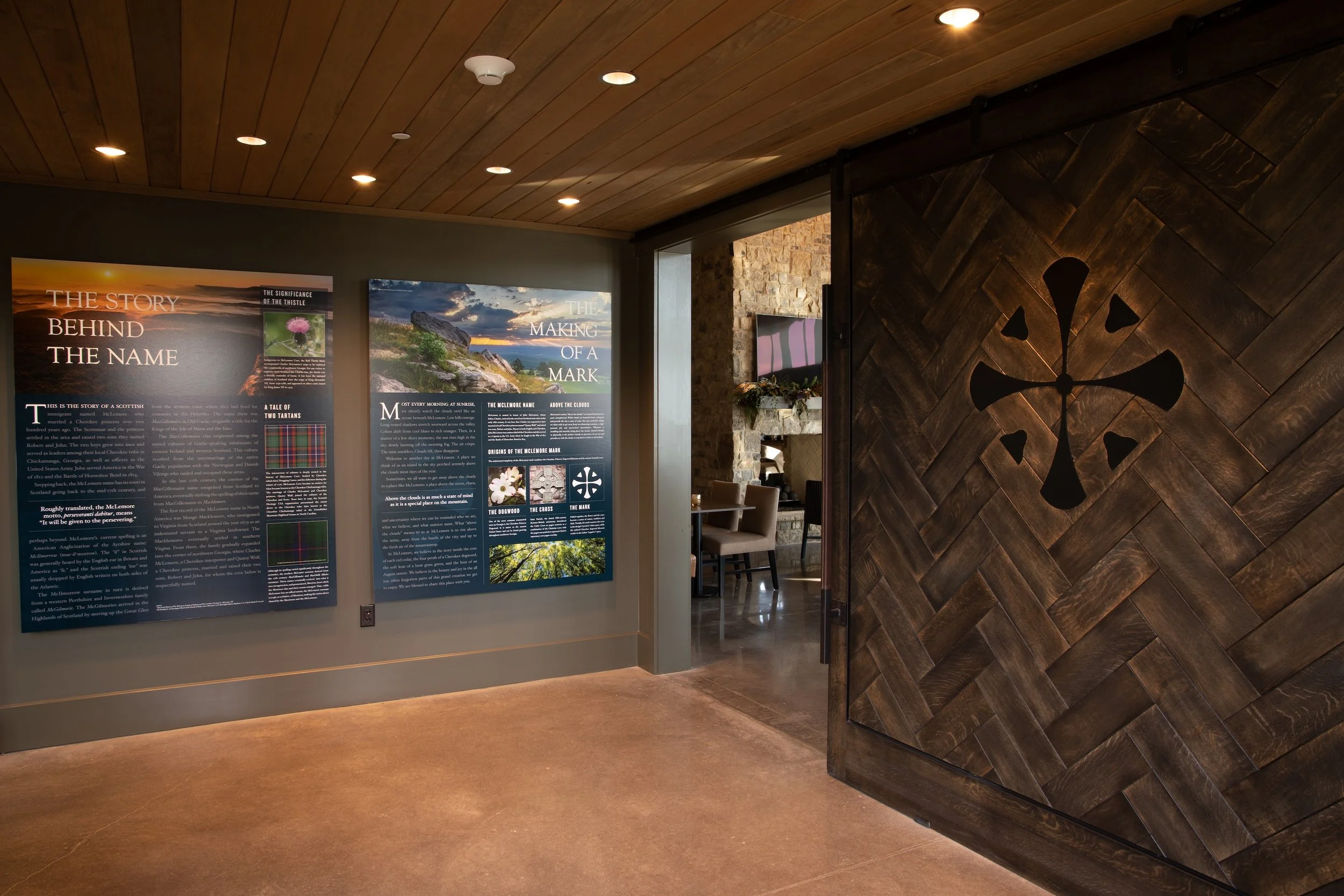
McLemore: The Question That Found the Mark
The McLemore rebrand began with a question about place. Not about design. About place.
What is the history of this particular mountain? Who lived here? What did they bring with them? What did they leave behind?
The answers, Cherokee heritage in the valley, Scottish settlement on the ridgeline, a botanically extraordinary landscape where both cultures had left their marks, produced everything that followed. Not immediately. There was a period of sitting with the information, of understanding how two histories could be held in a single image without either one being diminished. But the listening came first. The mark came after.
When Rees Jones, the golf course architect who commissioned the rebrand, reflected on the process, he described something that reveals what listening makes possible: thoughtful and insightful questions captured what makes the place special, and that was translated into messaging that worked. Visitors came, and their expectations were consistently exceeded.
Expectations exceeded. That is the outcome of design rooted in listening. Not design that tells people what to expect, but design so true to what the place actually is that reality meets or surpasses what was promised.
Cloudland: Listening to the Weather
Sometimes the most important thing to listen to is not a person. It is the place itself.
For Cloudland, the listening phase included spending time at the property at different hours, in different weather, understanding what the location actually felt like across a day. The phenomenon that became the name, the morning cloud inversions that leave guests floating above a sea of mist, was not discovered in a brief. It was experienced.
The design work that followed from that discovery was, in one sense, simple: name what is already there, then build a visual language that honors it. The color palette came from the colors of the sky at the moment the clouds fill the valley. The materials came from what the mountain already offered: stone, wood, metal. The typeface came from asking what kind of voice a place this particular would use.
None of that was possible without first being still enough to notice what was already present.
Flatrock Motorclub: Listening to the Experience Gap
Listening is not always about discovering something poetic. Sometimes it reveals a gap between what a client has and what they need, between the quality of an experience and the quality of its communication.
When we began working with Flatrock Motorclub, the listening phase revealed something straightforward: a world-class physical experience was going largely unshared. The track was built. The amenities were extraordinary. The real estate development was underway. But the brand's presence in the world was not keeping pace with what the property had become.
The gap between the experience and its communication was the insight. Not a logo problem. Not a website problem. A storytelling problem, one that required developing an entirely new content library, built from scratch, designed specifically to make someone who had never been to Tennessee understand what it felt like to drive a 3.5-mile racetrack designed by the firm behind some of Formula 1's most demanding circuits.
That insight only came from listening carefully to what the client knew, and noticing what was not being said, or shown, or shared.
The Discipline of Not Knowing
The hardest part of the listening phase is resisting the urge to solve the problem before you fully understand it. Designers are trained to see problems and propose solutions. That instinct is valuable. It can also be premature.
There is a version of every project where the designer arrives in the first meeting already knowing what kind of mark they are going to make, what the color palette will feel like, what the typeface should say. Sometimes that instinct is right. More often it produces work that is technically proficient and emotionally generic, work that could belong to any client in the same category.
What keeps us from that outcome is the discipline of not knowing. Of being willing to sit with a client's story long enough that something specific, something that could only be true of this place, this business, this moment, rises to the surface.
That is where the mark lives. That is where the name lives. That is where everything that follows finds its foundation.
The sketchpad opens after that. Not before.
ESQUE is a strategy, branding, and design studio. We work with clients whose ideas deserve to be experienced, not just seen. Get in touch.